

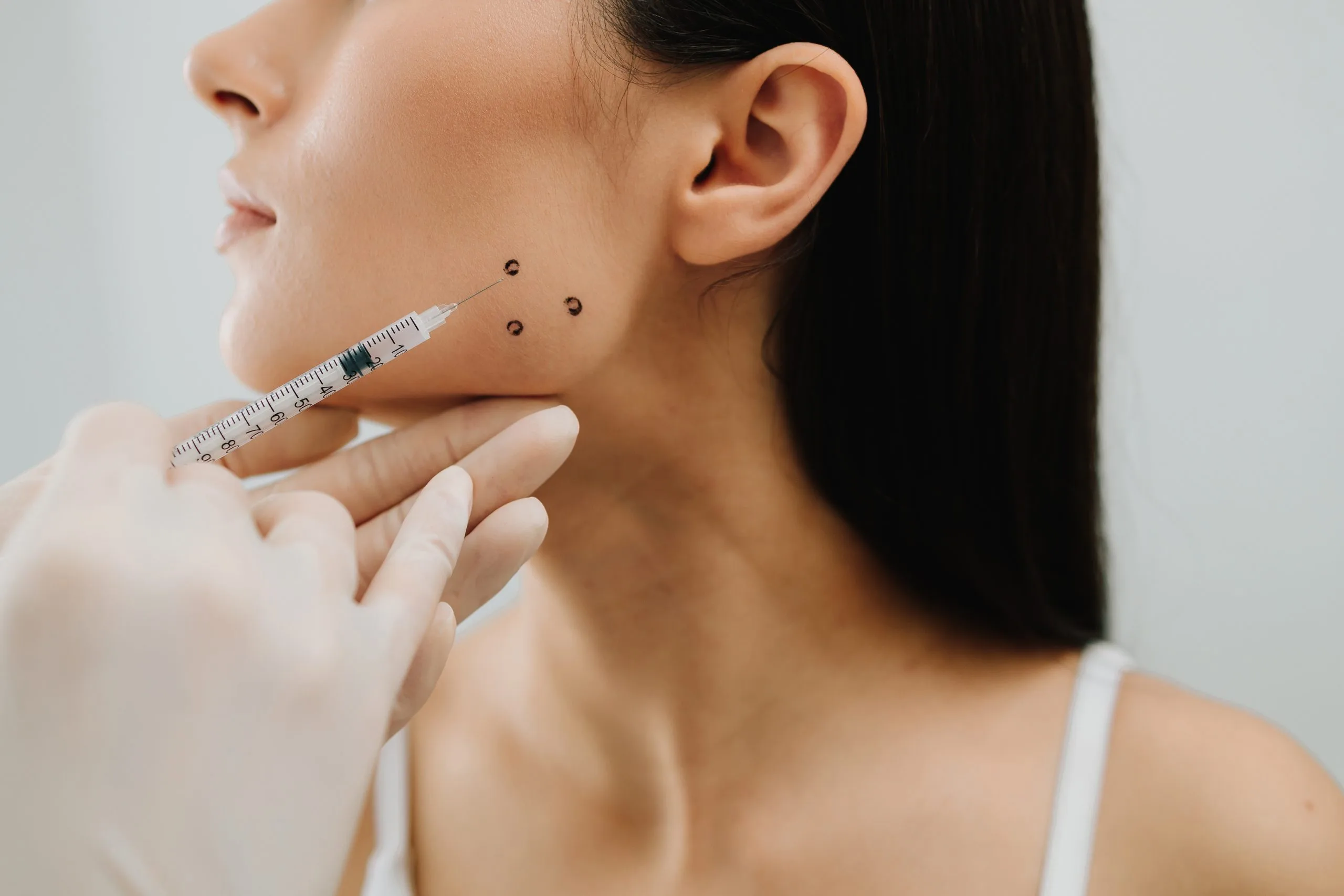
Botox is a highly effective, minimally invasive treatment that relaxes the jaw muscles to relieve pain, headaches, and discomfort caused by clenching or teeth grinding. At VitaGrace Aesthetics in Rockwall, TX, many clients are surprised to learn that Botox can provide significant relief from jaw tension, often within a couple of weeks.
We specialize in using Botox not just for cosmetic enhancements but for therapeutic relief. If you’re struggling with the effects of teeth grinding and jaw clenching, this treatment may be the answer you’ve been searching for.
Your jaw is controlled by a group of muscles that let you chew, talk, and yawn. The largest is the masseter – the thick muscle you can feel flex when you bite down, connecting your cheekbone to your lower jaw. Jaw tension often stems from bruxism, the habitual grinding or clenching of teeth, which can happen during the day in response to stress or at night while you sleep. Over time, this constant strain on the temporomandibular joint (TMJ) and surrounding muscles can lead to:
Pain or tenderness in the jaw, face, and neck
Morning or tension headaches, often near the temples
Earaches or a feeling of fullness in the ears
Clicking, popping, or grating sounds in the jaw joint
Difficulty or pain while chewing
Worn-down or sensitive teeth
A wider, squarer jawline from enlarged muscles
These symptoms are sometimes grouped under the terms TMJ or TMD, which refer to problems with the jaw joint and the muscles around it. Whatever you call it, the discomfort can affect your sleep, your focus, and your day.
While widely known for smoothing frown lines and crow’s feet, Botox is a versatile neuromodulator with powerful therapeutic applications. It works by temporarily interrupting the nerve signals sent to a specific muscle, preventing it from contracting as forcefully.
When injected into the masseter muscle, Botox does not freeze the muscle or prevent you from chewing, speaking, or making normal expressions. Instead, it relaxes the muscle enough to reduce the intensity of involuntary grinding and clenching. This provides two key benefits:
Therapeutic relief: The muscle can no longer clench with the same destructive force, leading to a significant reduction in jaw pain, headaches, and related symptoms.
Aesthetic improvement: As the overworked muscle is used less, it gradually softens and shrinks back toward its normal size, creating a subtle slimming effect on the lower face.
Many people seeking relief have already tried other methods with limited success. Each has a place, and Botox is one tool among many.
Night guards and splints: A custom mouthguard from a dentist protects teeth from grinding, but it doesn’t stop the muscle action itself – many people still clench against the guard and wake up sore. Botox addresses the root cause, and the two can be used together.
Stress management and physical therapy: Relaxation techniques, jaw exercises, massage, and warm compresses can help, especially when stress is the trigger, but they require consistent daily effort and may not be enough for severe bruxism.
Over-the-counter pain relievers: These mask symptoms temporarily but don’t address the underlying muscle hyperactivity.
Botox: By reducing the muscle’s ability to clench so hard, Botox targets the source directly and provides continuous relief for several months without daily effort.
The right approach depends on your symptoms and severity. At your appointment, the VitaGrace team can help you decide whether Botox is right for you or whether you’d benefit from combining it with other habits.
Your treatment journey is medically supervised and centered on your comfort. First, you’ll have a consultation with one of our providers to discuss your symptoms, examine your masseter muscles, and confirm you’re a suitable candidate. The procedure itself is quick – often under 15 minutes – with a series of small injections on each side of the jaw using a very fine needle. Most clients describe only a tiny pinch.
Timing of results. You may notice less clenching within a few days, with fuller relief around one to two weeks. Full therapeutic effects are most apparent after about a month, while facial slimming develops gradually over four to six weeks.
Daily life. There’s no downtime. You can return to normal activities right away – just avoid rubbing the treated area or lying down for a few hours afterward.
How long it lasts. Results typically last three to six months. As the effect fades, a follow-up treatment maintains relief.
Building results over time. Because the muscle is used less, repeated treatments can lead to longer-lasting comfort and a softer jaw contour.
Botox for jaw tension may be a good fit if you:
Clench or grind your teeth, especially at night
Wake up with a tight or sore jaw or tension headaches near your temples
Notice your jawline looks wider or squarer over time
Have tried night guards or other remedies without lasting relief
Want a non-surgical option that targets the muscle directly
It may not be the right first step for everyone. If your symptoms come mainly from a joint problem rather than muscle overuse, a different approach might serve you better. The honest way to find out is a personalized assessment with our team at VitaGrace Aesthetics.
Botox is also versatile. The same product treats concerns like frown lines, crow’s feet, and forehead lines, so many people address tension and fine lines in a single visit.
Botox for jaw tension offers a proven, minimally invasive way to relax the powerful masseter muscles – easing pain while softening the jawline over time. If you’re ready to break the cycle of clenching and discomfort, schedule a consultation at VitaGrace Aesthetics in Rockwall, TX, to discover if this treatment is right for you.

About the Author
Krista Boyd

