
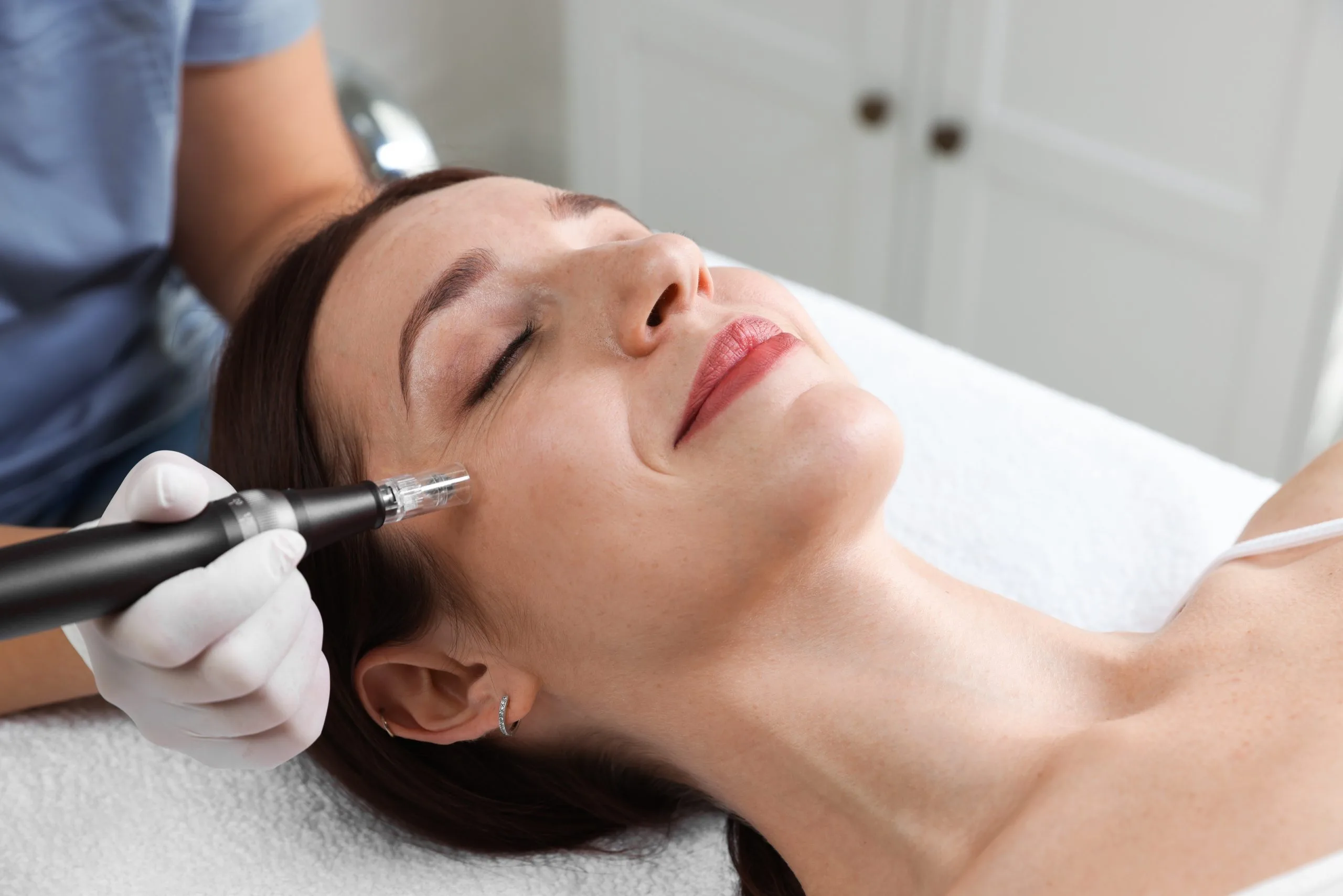
Microneedling has become a popular way to improve skin texture, fine lines and acne scars. Many people wonder whether an at-home roller or pen can deliver the same results as a professional treatment. The short answer is no. At-home devices work at a shallow depth, so they can refresh the skin’s surface but rarely improve scars or deeper lines. They can also raise the risk of irritation and infection when tools are reused or poorly cleaned. Here’s how the two options compare in results, safety and aftercare.
Microneedling is a skin treatment that uses very fine needles to create tiny, controlled channels in the skin. Our team offers microneedling for the face as well as body microneedling.
The small channels signal the skin to start its natural repair process. As the skin heals, it builds new collagen and elastin. These proteins help skin look firmer, smoother and more even over time. Needle depth matters. Deeper, controlled treatment usually leads to a stronger repair response.
Microneedling can help improve:
Rough or uneven texture
Fine lines and wrinkles
Acne scars
Enlarged-looking pores
Dull or uneven tone
Microneedling works with your own healing process, so results tend to look natural. That fits our goal of enhancing natural features rather than changing them.
At-home tools may give skin a brighter look and help serums absorb. These changes are usually mild and short-lived. Professional microneedling reaches the depth where collagen remodeling happens. That is why it can soften acne scars, fine lines and rough texture in ways home tools cannot. Many patients notice gradual improvement in the weeks after each session.
A provider examines your skin before treatment and checks for active breakouts or irritation. The plan is adjusted to fit what they see. At home, no one checks whether your skin is ready, whether pressure is even or whether the tool is clean. This supervision is one of the main reasons professional treatment is safer. Expect redness similar to a light sunburn, slight swelling, tightness and some flaking for a few days. Skin is also more sensitive to sun and products while it heals.
Never share or reuse needles.
Skip treatment on broken, sunburned or inflamed skin.
Pause harsh actives such as retinoids and exfoliating acids around treatment.
Wear sunscreen every day.
Good candidates are healthy adults who want smoother texture, fewer fine lines or softer acne scars. Microneedling suits many skin types. Our providers review your skin and goals to decide whether it fits. Another option such as a chemical peel or dermaplaning may suit some goals better.
Microneedling may not be right if you have:
Active acne, cold sores or skin infections
Eczema, psoriasis or rosacea flares in the treatment area
A history of poor wound healing or raised scars
Recent use of certain prescription acne medications
A current pregnancy
Share your full health history and current skin products before any treatment.
Keep your routine clean and simple after a professional session. Use a gentle cleanser, hydrating products and sunscreen. Avoid makeup for about a day. Skip heavy sweating, hot tubs and active ingredients for several days. Follow the specific instructions our team gives you.
Home users should follow the same gentle routine. Clean and store the device exactly as the maker directs, and replace the needle head often. Stop using the device and see a provider if redness, pain or bumps last more than a few days.
Collagen keeps building for weeks to months after a treatment series. Results can last a long time with daily sun protection. Skin keeps aging, so many patients choose occasional maintenance sessions.
Most patients benefit from a series of sessions spaced several weeks apart. Acne scars usually need more sessions than texture or tone concerns. Your provider tails the number to your skin and goals.
Most patients describe a mild, scratchy sensation during treatment. Afterward, skin looks pink and feels warm and tight. Redness usually fades within one to three days, and light flaking may follow. Smoother texture appears gradually as the skin rebuilds.
Your goals: At-home tools may support surface glow. Scars and lines respond better to professional treatment.
Your skin: Sensitive or acne-prone skin benefits from a trained eye.
Hygiene: Home use only stays safe with strict cleaning and frequent needle changes.
Consistency: Both options require patience, since collagen builds slowly.
See a provider if you want to treat scars, deeper lines or uneven tone. The same applies if home tools have caused irritation or you are unsure whether your skin can tolerate needling. A consultation with our team covers your concerns, a review of your skin and a plan built around your goals. You leave knowing which treatment fits and what results to expect. Professional microneedling reaches deeper, uses sterile tools and is guided by a trained provider, so results are more noticeable and side effects are easier to manage. For most patients seeking real improvement, professional treatment is the better choice.